Physical Address
304 North Cardinal St.
Dorchester Center, MA 02124
Physical Address
304 North Cardinal St.
Dorchester Center, MA 02124
Global aviation news tracker
Global aviation news tracker
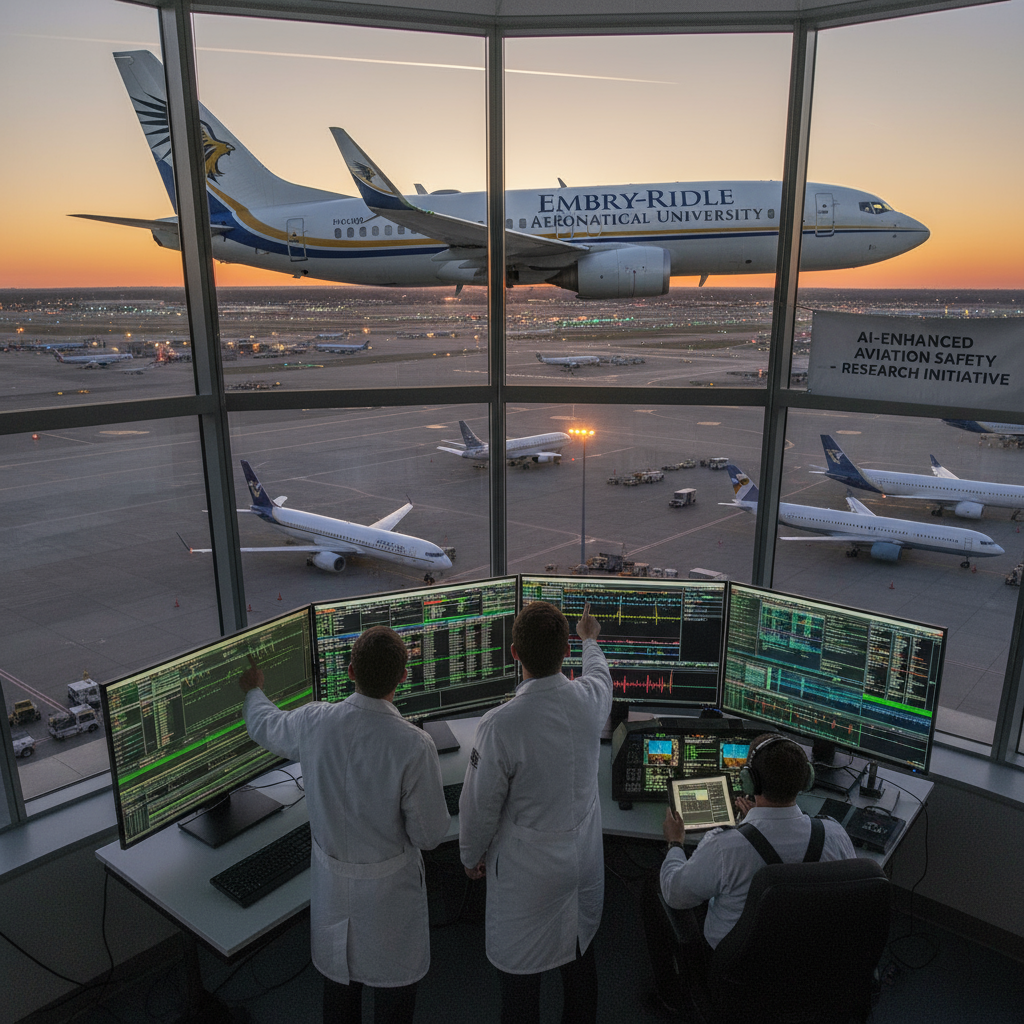
Embry‑Riddle researchers say a new AI could make radio chatter clearer for pilots and controllers.
Embry‑Riddle Aeronautical University is advancing an AI (artificial intelligence) radio communications system designed to reduce miscommunication in crowded airspace. Funded by Boeing Center for Aviation and Aerospace Safety grants, the team collected recordings from 12 major U.S. airports and trained a speech‑recognition tool that reportedly cut transcription error rates from roughly 80% to under 15% — a dramatic drop that targets clearer exchanges between pilots and air traffic controllers.
The dataset included real-world radio transmissions with background noise, accents and rushed phrasing common in peak traffic periods. Researchers focused on building a model tuned for aviation phraseology rather than general consumer speech systems, which struggle with callsigns, altitudes and runway identifiers used in tower and approach frequencies.
Rather than replacing human operators, the system provides a specialized transcript layer and confidence scoring to flag uncertain words. That helps controllers and flight crews spot potential misunderstandings quickly. The team emphasized safety and operational efficiency: accurate transcripts can aid post‑flight reviews, controller training and detecting recurring phraseology issues that have safety implications.
Next steps will likely include field trials with live traffic and integration tests with existing air traffic management tools. Embry‑Riddle’s work highlights how domain‑specific AI — tuned to aviation vocabulary and noise conditions — can close a big gap left by generic speech systems. If broader trials confirm lab results, airports and airlines could get another tool to strengthen safety margins in busy terminal airspace.