Physical Address
304 North Cardinal St.
Dorchester Center, MA 02124
Physical Address
304 North Cardinal St.
Dorchester Center, MA 02124
Global aviation news tracker
Global aviation news tracker
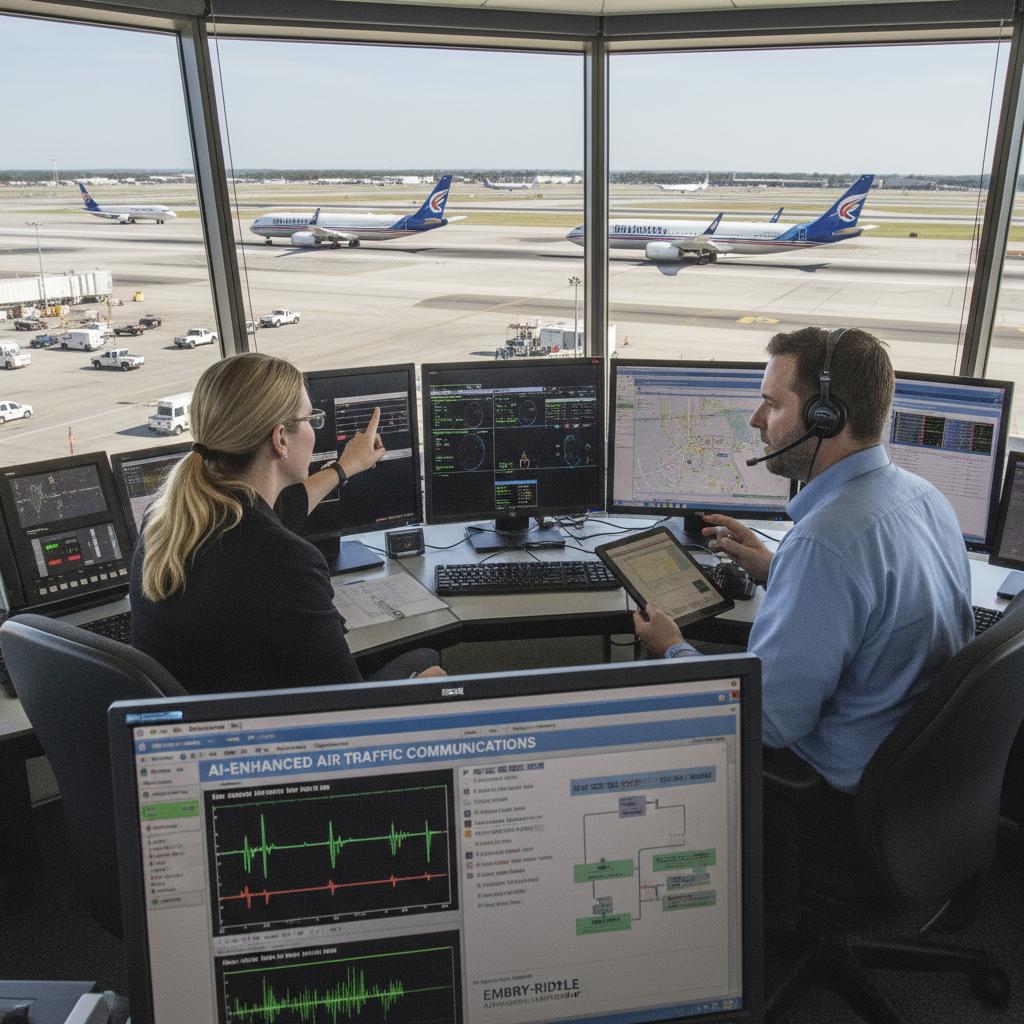
Embry‑Riddle researchers are using AI to make aviation radio communications far clearer and more reliable.
Supported by Boeing Center grants, teams at Embry‑Riddle Aeronautical University tailored speech-recognition models to aviation phraseology and jargon. Testing on voice data from 12 major U.S. airports reduced transcription error rates from about 80% to under 15%, a dramatic improvement for aviation radio clarity in busy airspace.
The effort focused on the unique challenges of air traffic control (ATC) radio: overlapping transmissions, background noise, accents, call signs, and standardized phraseology. By training models on real-world ATC exchanges and aviation terminology, the system better distinguishes callsigns, runway numbers, and clearance items than generic voice tools.
Researchers say the work isn’t just about cleaner transcripts. Clearer radio comms can speed controller‑pilot exchanges, reduce readback/hearback errors, and improve situational awareness in congested terminals and approach corridors. The team plans further validation in live operations and expanded datasets to cover more airports and dialects.
Next steps include pilot trials with controllers and pilots, expanded datasets that include international accents and remote tower audio, and integration testing with cockpit and tower systems. If adopted widely, the technology could become a practical tool for reducing misunderstandings that contribute to delays and safety risks.