Physical Address
304 North Cardinal St.
Dorchester Center, MA 02124
Physical Address
304 North Cardinal St.
Dorchester Center, MA 02124
Global aviation news tracker
Global aviation news tracker
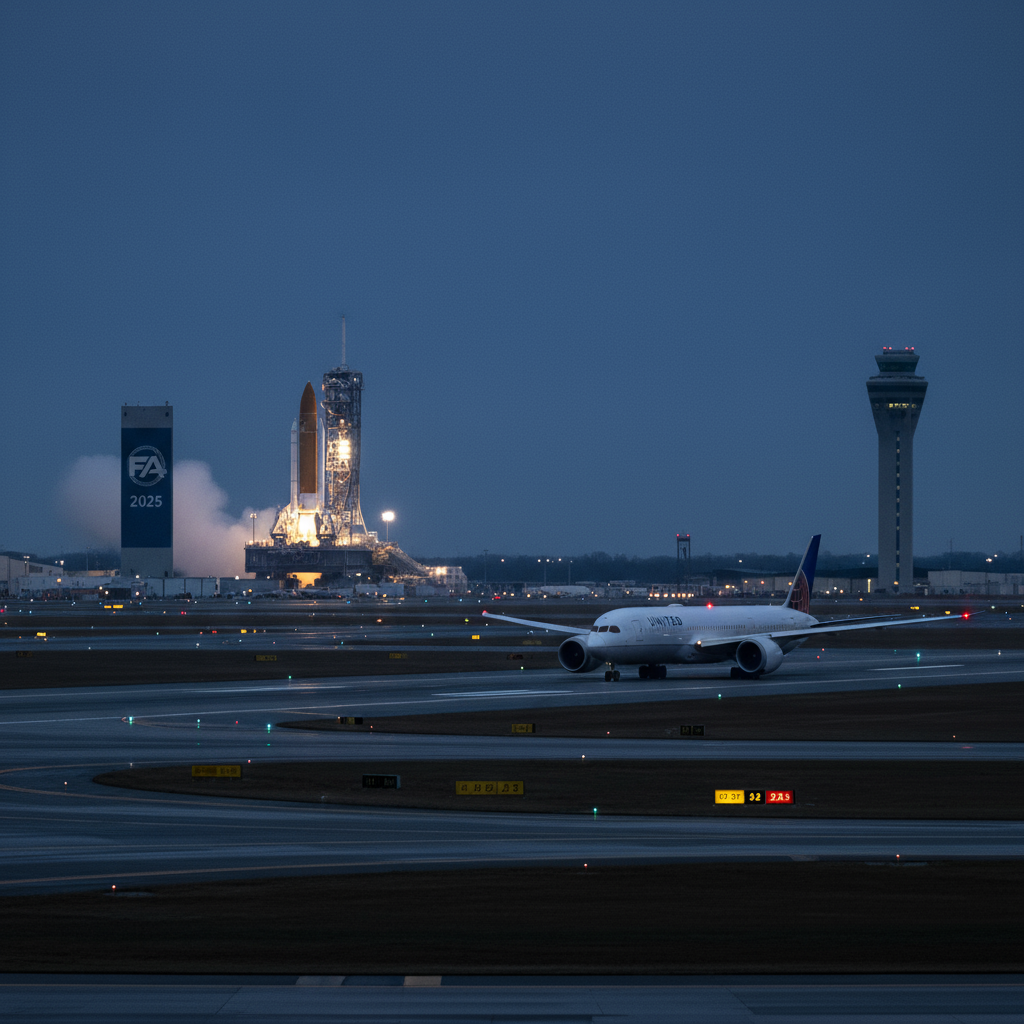
FAA mandates night-only space launches: US commercial launches and reentries will be limited to 10:00 p.m.–6:00 a.m. EST (night-only space launches) effective November 13, 2025.
The Federal Aviation Administration (FAA) announced a temporary restriction that confines all U.S. commercial space launches and spacecraft reentries to nighttime hours. The rule goes into effect on November 13, 2025, and sets the approved window between 10:00 p.m. and 6:00 a.m. EST (Eastern Standard Time). The FAA says the move is intended to reduce stress on the National Airspace System (NAS) while controllers manage a heavier and more complex flow of traffic.
According to the FAA, the restriction responds to ongoing air traffic control (ATC) staffing shortages and rising operational complexity in shared airspace. Limiting launches and reentries to nighttime is designed to concentrate these high-disruption events into predictable windows, improving safety margins and overall efficiency until further notice. The order applies to all commercial operators conducting launches or reentries within U.S. jurisdiction.
Regulatory details published by the FAA specify the hours and effective date but stop short of setting a firm end date; the agency said the policy will remain “until further notice.” Operators and affected stakeholders should expect coordination with ATC and the FAA during planning cycles. While this is a national-level directive, local scheduling, and range coordination may still shift individual launch or reentry times inside the prescribed window.
For airlines, airport operators, and other NAS users, the practical effect will be greater predictability for daytime traffic but potentially more concentrated coordination needs at night. Commercial space operators will also need to adapt launch and reentry planning to the new window. Keep an eye on FAA releases for operational guidance and scheduling updates; the agency will handle day-to-day coordination with air traffic facilities.