Physical Address
304 North Cardinal St.
Dorchester Center, MA 02124
Physical Address
304 North Cardinal St.
Dorchester Center, MA 02124
Global aviation news tracker
Global aviation news tracker
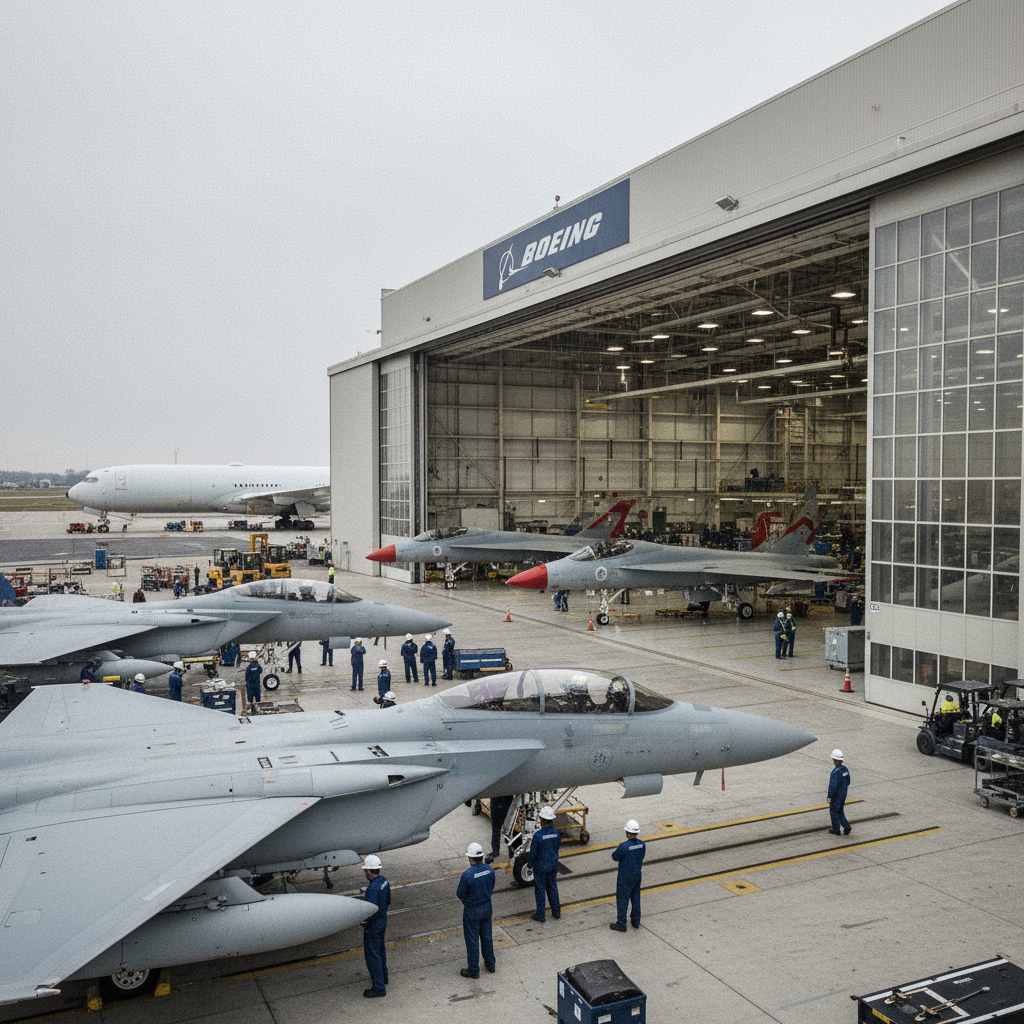
Boeing strike ends after a 101-day walkout in St. Louis, and production of key military jets and 777X wing sections will restart.
Workers at Boeing Defence in St. Louis voted to accept a revised contract on November 13, bringing to a close a 101-day Boeing strike that had paused work on F‑15 and F/A‑18 fighter jets, the T‑7 trainer and 777X wing sections. The pause delayed F‑15 deliveries to the US Air Force and disrupted several major programmes across Boeing’s military and commercial lines.
Employees are scheduled to return to the factory floor beginning November 16, with production lines set to ramp up over the coming days. Boeing Defence (St. Louis) builds components and completes final assembly on several platforms; resuming shifts will restore output that had been constrained since the walkout began.
The labour action hit both defence and commercial workstreams, creating knock‑on effects for suppliers and military schedules. While specifics on delivery schedules remain subject to Boeing and the US Air Force updates, the restart is a critical step toward clearing backlogs.
Contract details and the terms that won worker approval were not included in initial reports; Boeing and labour representatives are expected to release more information as teams return. For operators and defence planners, the near-term focus will be on how quickly Boeing can normalize production and meet outstanding delivery commitments.