Physical Address
304 North Cardinal St.
Dorchester Center, MA 02124
Physical Address
304 North Cardinal St.
Dorchester Center, MA 02124
Global aviation news tracker
Global aviation news tracker
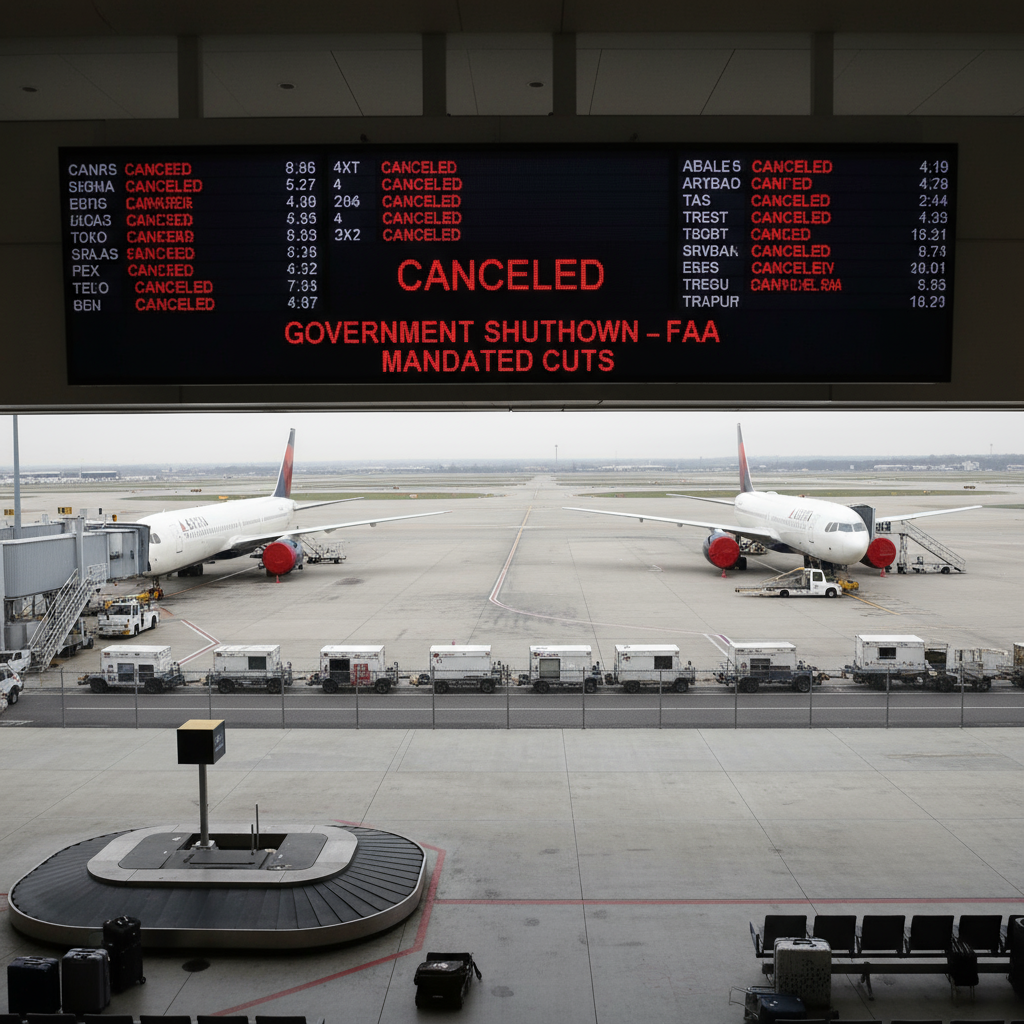
More than 8,000 flight cancellations have been recorded since November 7 as a US government shutdown strains air traffic control staffing.
The Federal Aviation Administration (FAA) ordered scheduled reductions at 40 major airports, initially cutting operations by roughly 4–10% at key hubs, as controller shortages grew. The disruption has stretched into the shutdown’s sixth week and affected both domestic and international routes.
Cancellations peaked at 3,756 flights across a three-day span, producing cascading delays and crew-scheduling problems for carriers. Airlines reported that the FAA directives forced them to remove seats and cancel services to keep traffic within safe staffing limits at impacted airports.
Air traffic controller availability is central to airport throughput. With federal staffing gaps, the FAA limited slot assignments and traffic flow at busy hubs to maintain safety margins. The constraints hit high-frequency spokes and long-haul connections hardest, creating knock-on effects throughout airline networks.
Operationally, airlines must reposition aircraft and crews to rebuild disrupted rotations. That process requires available crews, aircraft maintenance slots and reciprocal availability at destination airports — all of which were strained by the concentrated cancellations and delays.
Industry analysts and carriers say even after a funding resolution, normal schedules will not snap back instantly. Recovery is likely to take at least a week as airlines reset flight schedules, reassign crews and restore aircraft to standard rotations. Passengers should expect lingering delays and check airline communications closely.