Physical Address
304 North Cardinal St.
Dorchester Center, MA 02124
Physical Address
304 North Cardinal St.
Dorchester Center, MA 02124
Global aviation news tracker
Global aviation news tracker
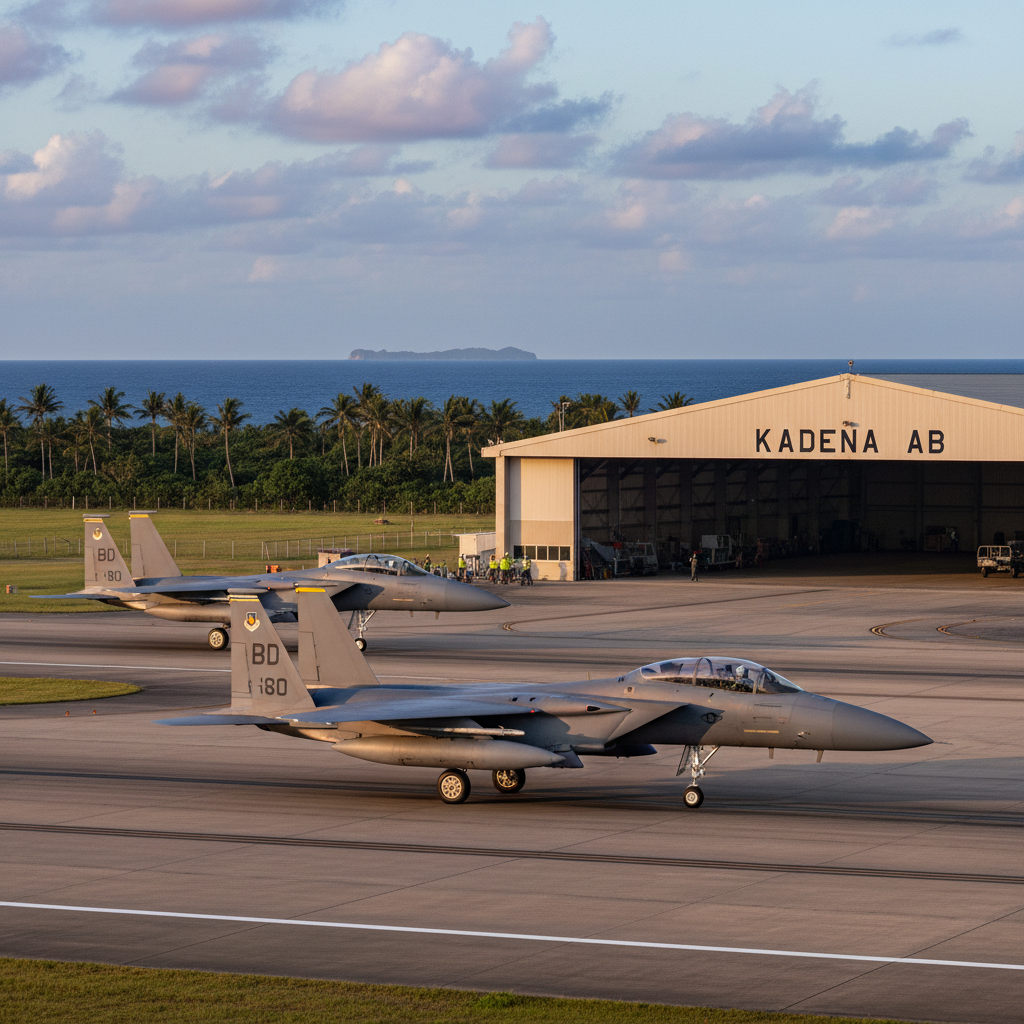
USAF F-15E Strike Eagles completed a six-month rotation at Kadena Air Base, reinforcing regional deterrence and cooperation.
The F-15E Kadena deployment, carried out by the 336th Expeditionary Fighter Squadron (EFS) of the United States Air Force (USAF), wrapped after a six-month rotational tour at Kadena Air Base on Okinawa, Japan. The squadron’s F-15E Strike Eagle aircraft followed earlier operations at Diego Garcia in the British Indian Ocean Territory, supporting a mix of training, deterrence and interoperable missions with regional partners.
The deployment underscored two priorities: forward presence and combined training. Pilots and maintainers from the 336th EFS practiced integrated air operations with allied forces, improving tactics and communications for real-world contingencies. The F-15E (a two-seat, dual-role strike fighter) provided both air-to-ground and air-to-air capability during the rotation, demonstrating flexible firepower and mission adaptability.
Beyond flight hours, the tour included joint exercises, cross-deck maintenance exchanges and command-and-control drills designed to sharpen coalition responses across the Indo-Pacific. Deployments like this also validate logistics and sustainment plans for extended operations — a practical test of readiness short of combat.
With the rotation complete, the Strike Eagles and their crews are returning to home stations to reset and reconstitute — a standard cycle that keeps forward forces sustainable. For regional partners, the visible presence of strike-capable fighters enhances deterrence and reassures allies that combined readiness remains a priority.
Operational rotations like this are a routine yet influential element of modern airpower diplomacy: they keep tactics sharp, logistics proven, and international partnerships current — all while signaling commitment to a stable Indo‑Pacific security environment.