Physical Address
304 North Cardinal St.
Dorchester Center, MA 02124
Physical Address
304 North Cardinal St.
Dorchester Center, MA 02124
Global aviation news tracker
Global aviation news tracker
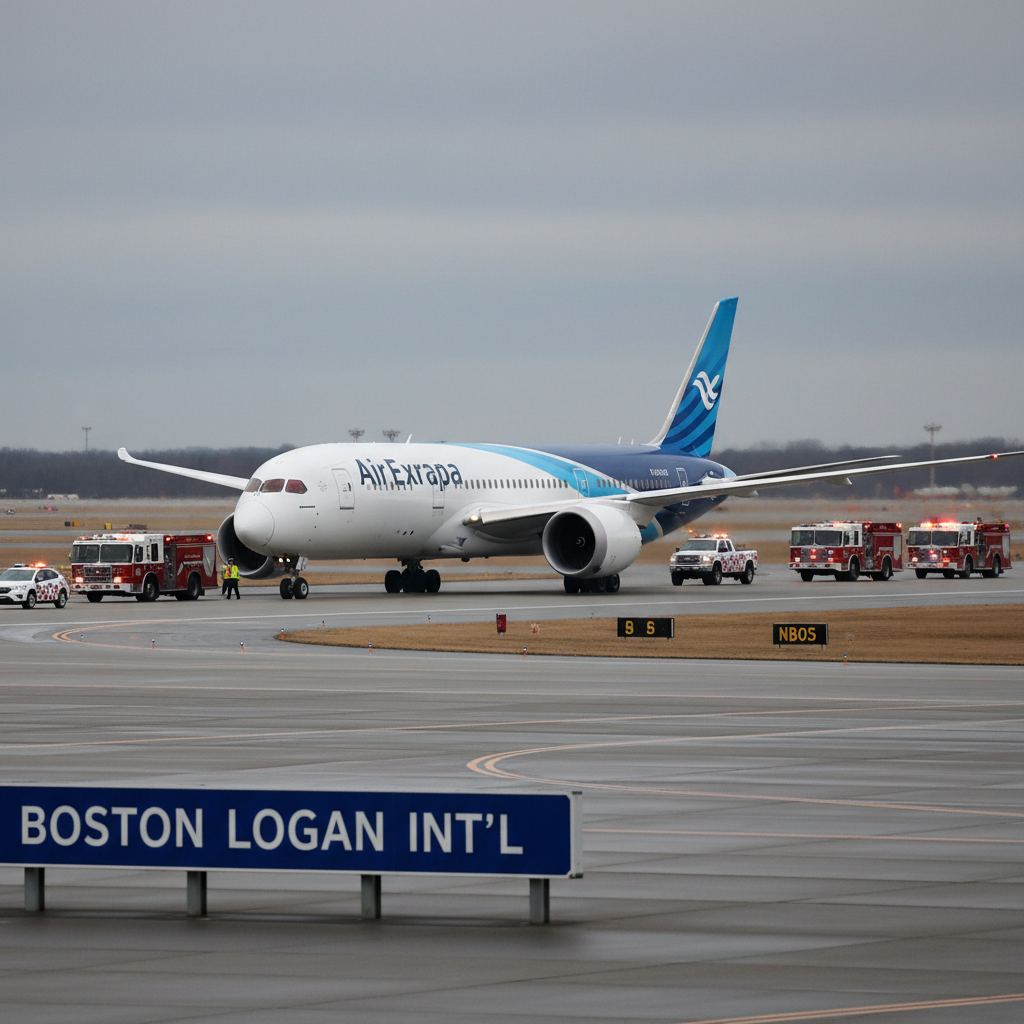
Air Europa 787 diversion: UX91, a Boeing 787 (IATA: UX, ICAO: AEA), reported minimum fuel while approaching New York JFK and was diverted to Boston Logan International Airport on November 22.
The transatlantic service, operating as UX91, declared a minimum fuel situation to air traffic control (ATC) while inbound to John F. Kennedy International Airport (JFK). ATC gave the aircraft priority handling and the crew diverted to Boston Logan (BOS), where the Boeing 787 landed safely. No injuries were reported.
Priority handling in these cases speeds an aircraft’s approach and landing to reduce fuel burn and risk. Pilots are trained to declare minimum fuel when remaining fuel is such that any undue delay could lead to a fuel emergency; controllers then coordinate clearances and sequencing to expedite the flight.
Incidents like this underline the importance of fuel management and contingency planning for long-haul carriers. Many transatlantic flights operate under ETOPS (Extended-range Twin-engine Operations) rules, which require alternate airports and fuel reserves for twin‑engine aircraft flying long overwater routes. While ETOPS sets planning standards, real‑time factors — weather, congestion at busy hubs like JFK, or ATC restrictions — can force crews to divert to nearer alternates such as BOS.
The aircraft’s safe arrival at Boston Logan and the absence of injuries suggest the situation was managed according to established safety procedures. Aviation authorities and the operator may follow up with routine checks; meanwhile, passengers affected by the diversion typically receive support from the airline for onward travel.