Physical Address
304 North Cardinal St.
Dorchester Center, MA 02124
Physical Address
304 North Cardinal St.
Dorchester Center, MA 02124
Global aviation news tracker
Global aviation news tracker
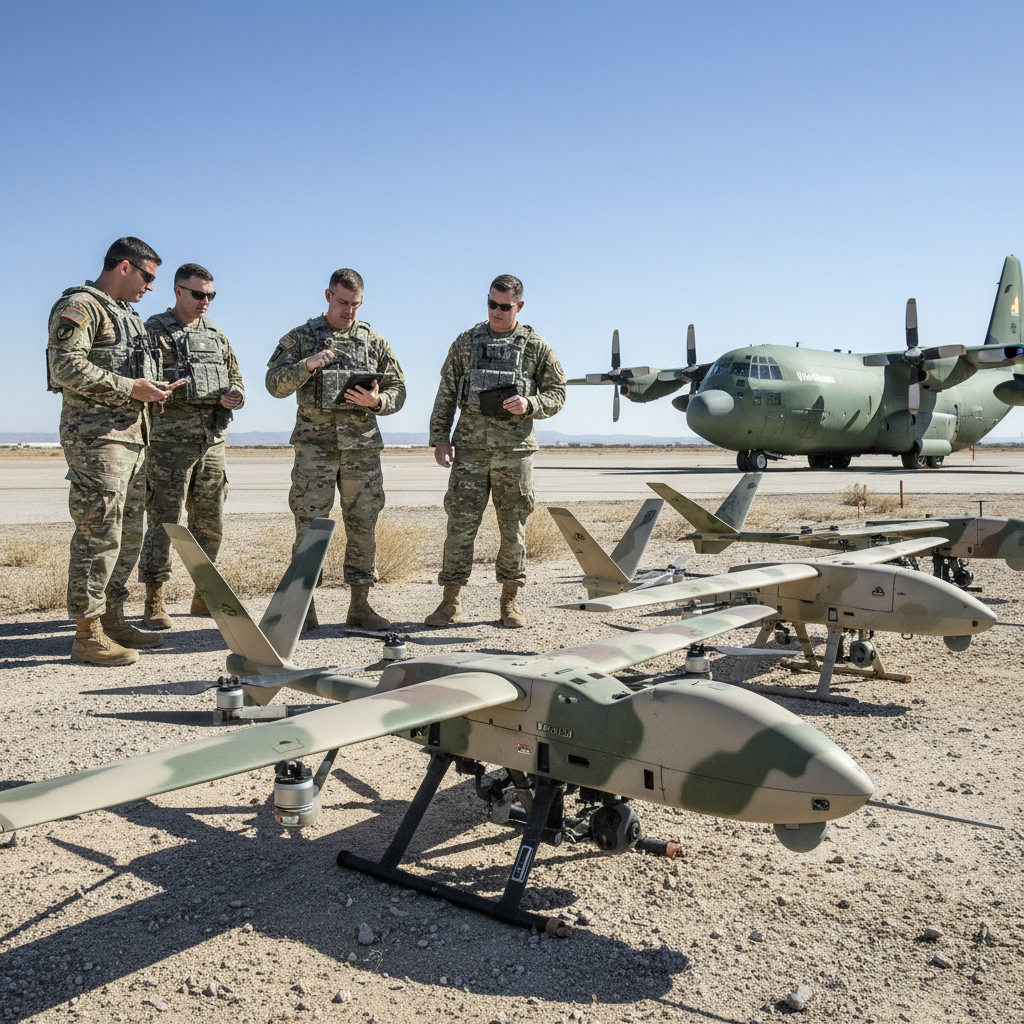
The US Army is moving quickly to get more small drones into soldiers’ hands.
On November 24 the US Army released a second Sources Sought Notification aimed at accelerating SUAS procurement — small uncrewed aircraft systems (SUAS) — for a Company-Level Directed Requirement. The notice follows an initial push in March 2024 and is designed to shorten acquisition timelines so company-level units can field more capable systems sooner.
The Army’s language stresses speed, modularity and practical soldier-facing upgrades. This expanded industry outreach asks vendors to show how they can deliver ready-to-use SUAS kits that meet real-world battlefield constraints while integrating into existing logistics and sustainment chains.
By issuing a second Sources Sought, the service signals two priorities: leverage commercial innovation and reduce bureaucracy that slows fielding. The Company-Level Directed Requirement focuses on systems that platoons and companies can operate and maintain with minimal new training. The Army wants solutions that close capability gaps now, not in years.
The move is notable because Sources Sought notices are used to map industry capabilities before formal contracting. This second notice suggests the Army has found enough interest to justify widening the net and potentially accelerating subsequent contract vehicles. It also reflects a broader trend: militaries increasingly rely on small unmanned systems for intelligence, surveillance and reconnaissance at the tactical edge.
For defense firms, the message is clear — show practical, deployable SUAS designs that reduce lifecycle burden and can be fielded quickly. For soldiers, faster procurement could mean more persistent situational awareness and lower-risk reconnaissance at the platoon and company level. Watch for follow-up solicitations and possible rapid acquisition routes in the months ahead.