Physical Address
304 North Cardinal St.
Dorchester Center, MA 02124
Physical Address
304 North Cardinal St.
Dorchester Center, MA 02124
Global aviation news tracker
Global aviation news tracker
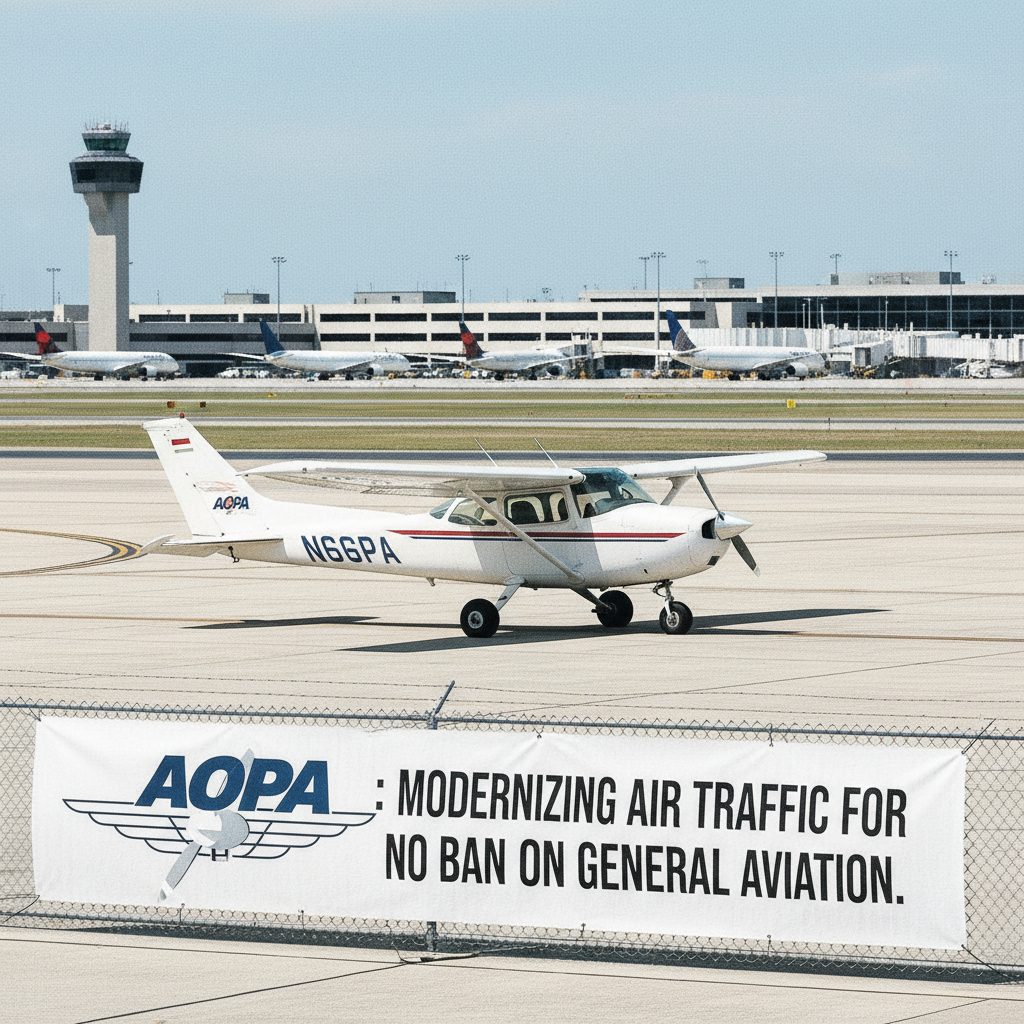
AOPA warns the FAA general aviation ban at 12 major US airports sets a troubling precedent for private pilots and business aviation.
The Aircraft Owners and Pilots Association (AOPA) criticized the Federal Aviation Administration (FAA) after a revised order effective November 10 kept broad restrictions on most general aviation (GA) movements at a dozen busy U.S. airports. The FAA also capped airline schedule cuts at 6% in that order, and the restrictions remained in place even after the government shutdown ended late on November 12.
AOPA — which represents private owners, flight schools and business aircraft operators — said the move risks creating a policy that limits access for small aircraft without addressing root causes. The association urged officials to prioritize air traffic control (ATC) modernization and to invest in controller staffing rather than resort to sweeping GA limits.
In its public comments, AOPA argued that debates over ATC privatization distract from urgent infrastructure needs and the immediate staffing shortfalls that can slow traffic recovery. The group framed the ban not only as an operational restriction but as a policy signal that could affect business aviation, medevac flights and pilot training at impacted airports.
The FAA has not publicly listed the 12 airports in this briefing, and AOPA’s response emphasized next steps: immediate talks with the agency, transparency on the criteria used for the restrictions, and timelines for restoring routine GA access. Without additional FAA detail, the debate will center on whether short-term capacity controls should override longstanding community and business aviation needs.
For pilots and industry watchers, the episode underscores a recurring tension: how the FAA balances airline schedules, airport capacity and safe, equitable access for general aviation operators during disruptions or regulatory changes.