Physical Address
304 North Cardinal St.
Dorchester Center, MA 02124
Physical Address
304 North Cardinal St.
Dorchester Center, MA 02124
Global aviation news tracker
Global aviation news tracker
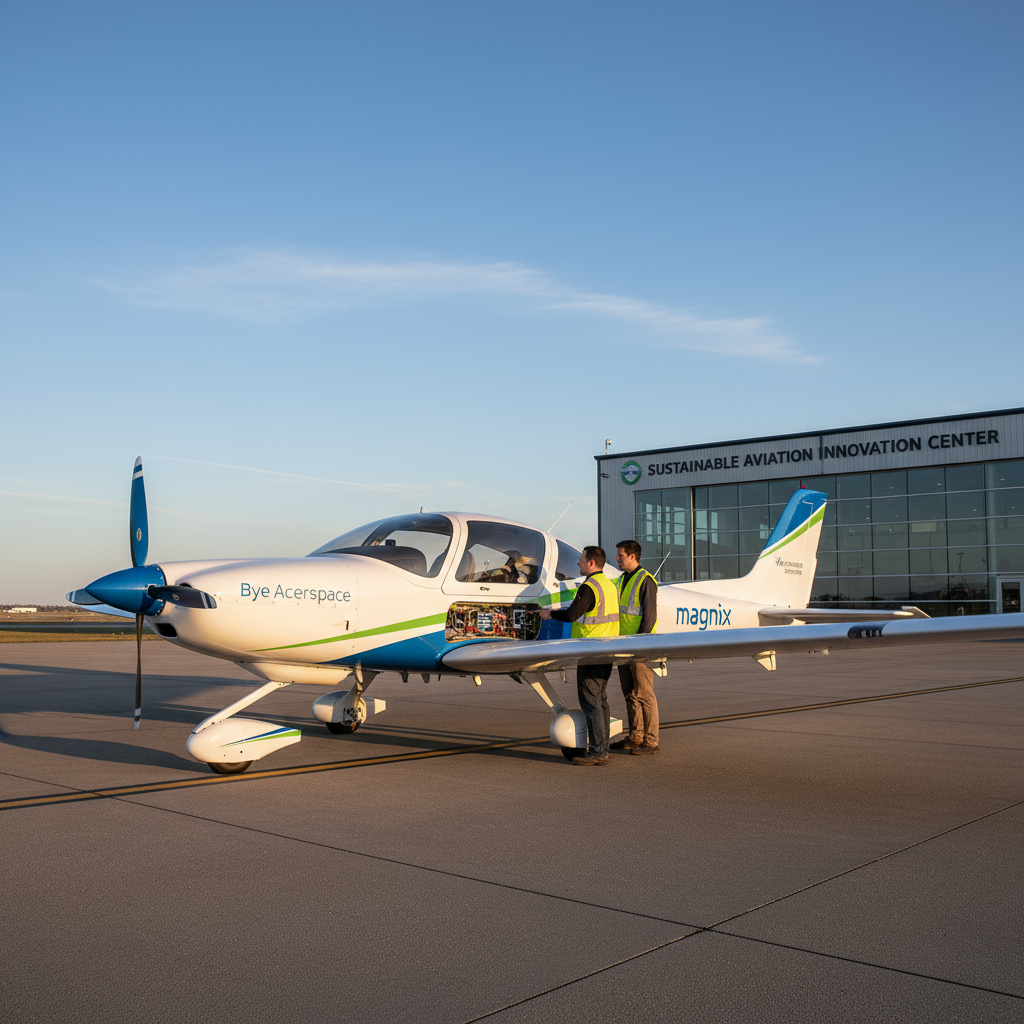
Bye Aerospace selects magniX’s Samson battery for its eFlyer 2 prototype, a move meant to fast-track two-seat electric flight training.
On October 31, 2025, Bye Aerospace confirmed it will fit the eFlyer 2 two-seat all-electric trainer with magniX’s Samson battery system. The announcement positions the Bye Aerospace eFlyer 2 as a near-term contender in the flight-training market by pairing the airframe with a battery that the companies say boosts energy density and improves safety.
The companies said the pairing targets flight schools and training organizations in the United States and Europe, with certification and entry into service planned for 2026. The eFlyer 2 is being developed as a zero-emission replacement for piston trainers, and this battery selection is a step toward that goal without changing the aircraft’s two-seat training layout.
Beyond the product names, this deal reflects a broader industry trend: suppliers and airframers are moving from lab demos to certified, operational equipment. For trainers—where turnaround, reliability, and operating cost matter—higher energy density and robust safety systems are key to winning customers quickly.
MagniX’s Samson battery system is being promoted for higher usable energy per kilogram and safety architecture tailored to aviation use. Bye Aerospace and magniX expect the combined package to address range and charge-cycle needs typical of flight schools while meeting certification expectations. The timeline set by the companies targets regulatory approvals and entry into service in 2026, keeping the eFlyer 2 on a compressed development track compared with earlier electric aircraft projects.
For flight schools, instructors and students, the promise is straightforward: quieter, lower-emission sorties with potentially lower operating costs over time. For the industry, the announcement underscores growing momentum toward practical, certifiable electric solutions rather than one-off demonstrators.