Physical Address
304 North Cardinal St.
Dorchester Center, MA 02124
Physical Address
304 North Cardinal St.
Dorchester Center, MA 02124
Global aviation news tracker
Global aviation news tracker
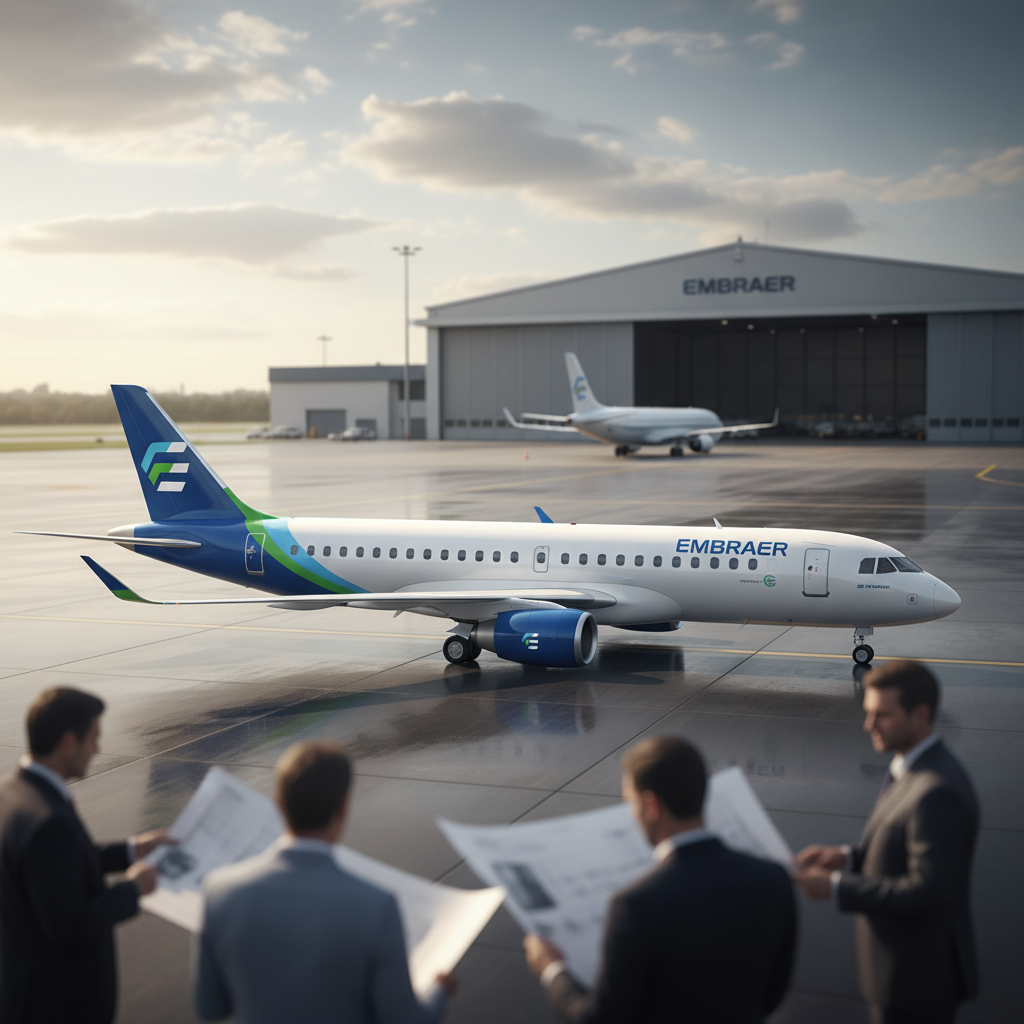
Embraer is studying a new narrowbody aircraft to offer airlines an alternative to the A320neo and 737 MAX.
Brazilian manufacturer Embraer confirmed ongoing feasibility work and customer consultations under CEO Arjan Meijer, while continuing to support its E2 family of regional jets. The plan would target the single-aisle market dominated by Airbus (A320neo family) and Boeing (737 MAX family) and could materialize in the 2030s if a launch decision is taken.
Airlines face long wait times and production backlogs for A320neo and 737 MAX deliveries; Embraer says a new airplane could give carriers a third-choice supplier and help rebalance lead times. The company has not announced a formal launch, investment amount, or detailed configuration, and remains publicly committed to its E2 (Embraer E2) program as the immediate product focus.
Meijer and Embraer executives are reportedly holding exploratory talks with potential customers to understand route needs, fleet size preferences and range requirements. Any new entrant would need to match or beat the economics, range and airport performance that make the A320neo and 737 MAX attractive to legacy and low-cost carriers worldwide.
Design choices — such as two- versus three-class layouts, engine selection, and ETOPS (Extended-range Twin-engine Operations) capability — will depend on the airline feedback Embraer collects during the study phase. The company is balancing the technical and capital demands of building a clean-sheet single-aisle against the commercial opportunity of carving out share from Airbus and Boeing.
For now, Embraer’s feasibility work signals a strategic intent to explore growth beyond regional jets into the high-volume single-aisle sector. The industry will watch any formal launch decision closely because a new competitor could reshape delivery dynamics and fleet planning for carriers worldwide.