Physical Address
304 North Cardinal St.
Dorchester Center, MA 02124
Physical Address
304 North Cardinal St.
Dorchester Center, MA 02124
Global aviation news tracker
Global aviation news tracker
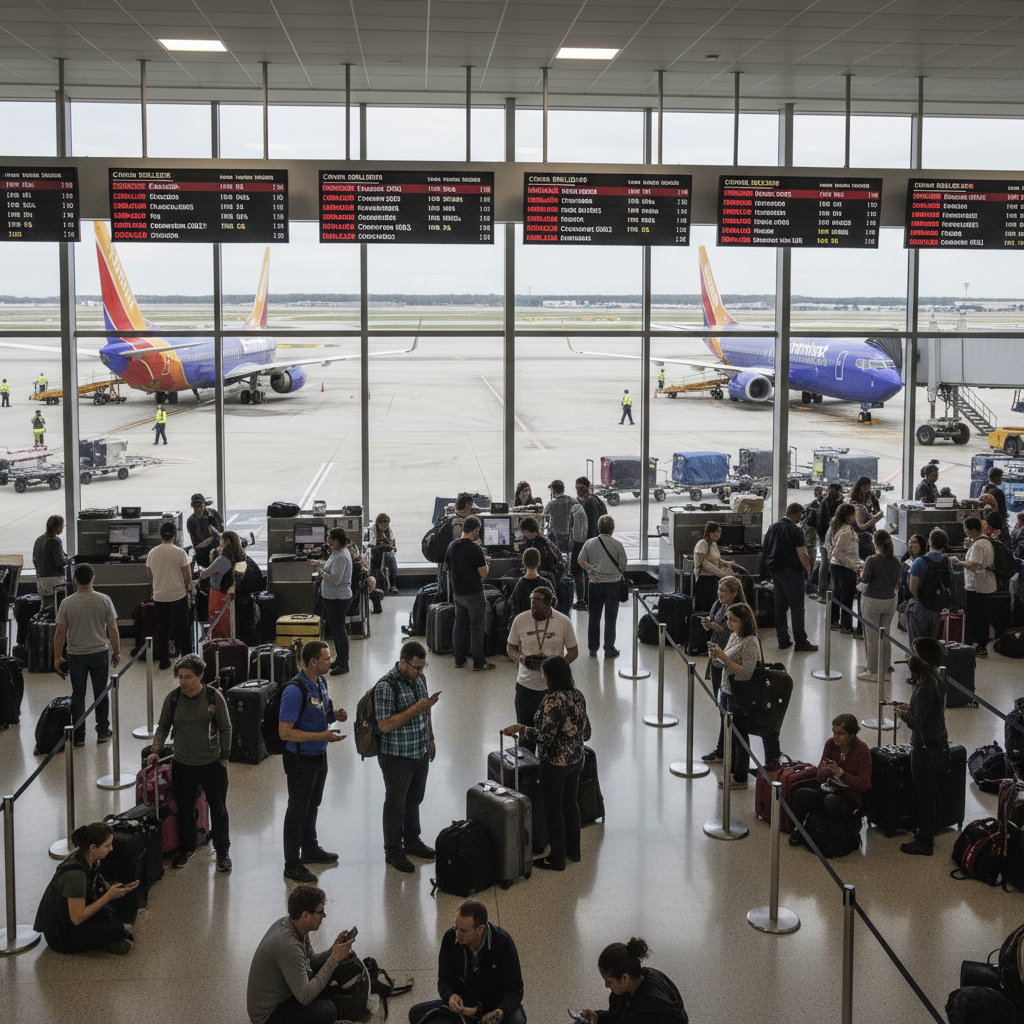
FAA air traffic cuts began November 14, 2025, disrupting flights across 40 U.S. airports.
The Federal Aviation Administration (FAA) began planned reductions in air traffic operations at 40 U.S. airports on November 14, 2025 — a move widely described as targeted capacity management. The FAA air traffic cuts included measures that produced 19 cancellations and 117 delays at Fort Lauderdale–Hollywood International Airport (FLL / KFLL) by 5 p.m. local time, officials said, and ripple effects were reported at several major hubs.
Airlines and travelers scrambled to adjust. Carriers updated schedules, crews were reallocated and airport throughput slowed as slot windows tightened; passengers faced longer wait times at gates and on the tarmac. Airport operators cited the changes as part of a nationwide effort to address operational constraints and improve overall system predictability.
The policy impacts a mix of large and medium airports and varies by location. Fort Lauderdale (FLL / KFLL) was singled out in early reporting with the specific counts noted above, but the FAA said similar, scaled measures would apply at other sites to balance arrivals and departures. Airlines have been revising flight plans and advising customers to monitor notifications — especially on high-traffic days when throughput margins are thin.
Through the rest of November, passengers should expect pockets of disruption as the FAA implements its capacity adjustments. Airlines have emphasized customer communication; travelers are urged to confirm flights before heading to the airport. The FAA framed the measures as operationally necessary to manage system constraints while minimizing longer-term disruption across the national airspace on and after November 14, 2025.