Physical Address
304 North Cardinal St.
Dorchester Center, MA 02124
Physical Address
304 North Cardinal St.
Dorchester Center, MA 02124
Global aviation news tracker
Global aviation news tracker
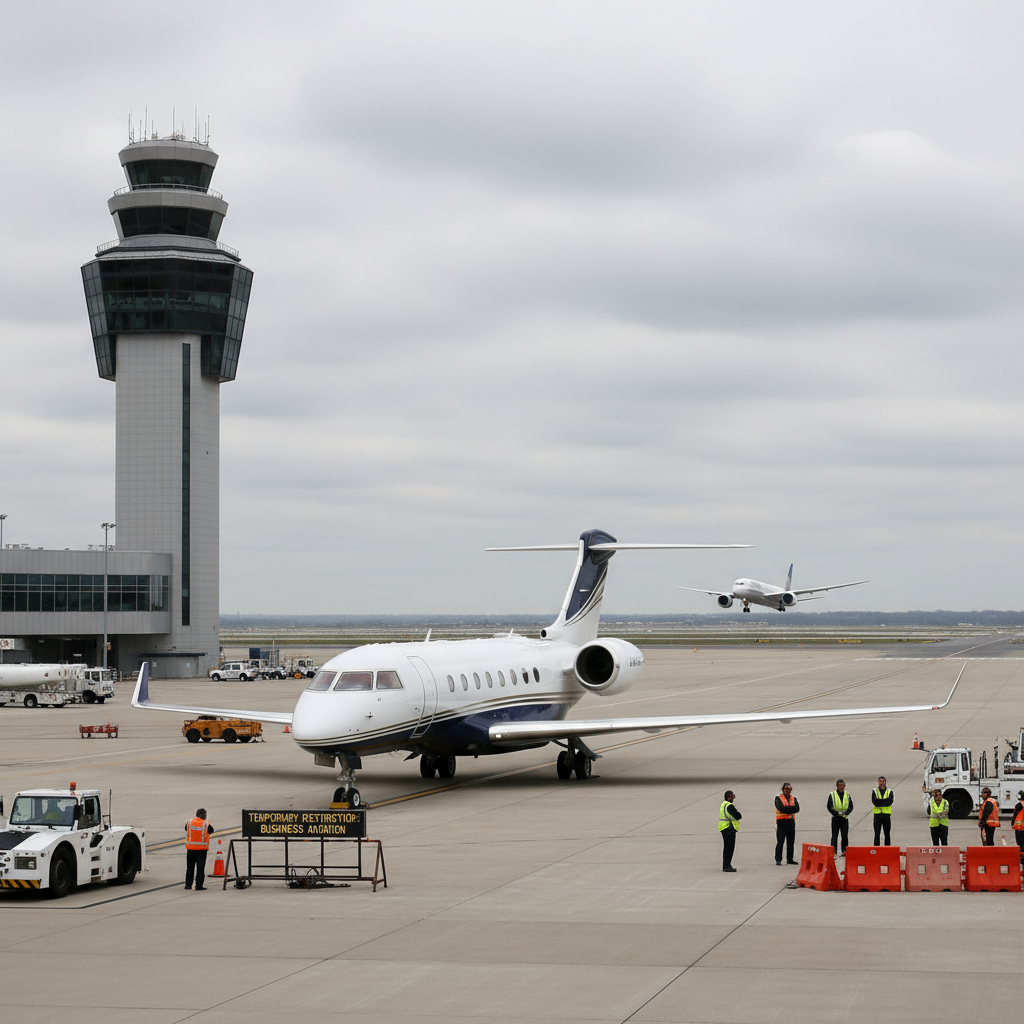
FAA business aviation restrictions take effect November 11, 2025, curbing most non‑scheduled private and charter flights at 12 major U.S. airports.
The Federal Aviation Administration (FAA) said the limits are a temporary measure tied to ongoing air‑traffic controller shortages during the federal government shutdown. The rules, effective November 11, 2025, largely bar non‑scheduled business aviation — including many private and on‑demand charter operations — at several primary hubs while preserving operations for based aircraft and essential missions.
Exceptions include based aircraft, medical and emergency flights, law enforcement, firefighting, and military operations. The FAA has published NOTAMs (Notices to Air Missions) for each affected field directing operators to check airport‑specific guidance and plan diversions to secondary airports.
The policy touches 12 major airports, where operators are already rerouting to reliever fields. Affected airports with their IATA codes are:
The National Business Aviation Association (NBAA) has sounded the alarm, saying general aviation supports more than one million U.S. jobs and generates roughly $340 billion in economic activity annually. Airlines, charter operators and fixed‑base operators (FBOs) will feel pressure from lost lift and rerouted traffic at reliever airports.
Industry trade groups are urging Congress to end the shutdown and restore normal staffing levels so the FAA can lift the restrictions. For now, operators should review each airport’s NOTAM before filing flight plans and expect increased demand at secondary airports near the affected hubs.