Physical Address
304 North Cardinal St.
Dorchester Center, MA 02124
Physical Address
304 North Cardinal St.
Dorchester Center, MA 02124
Global aviation news tracker
Global aviation news tracker
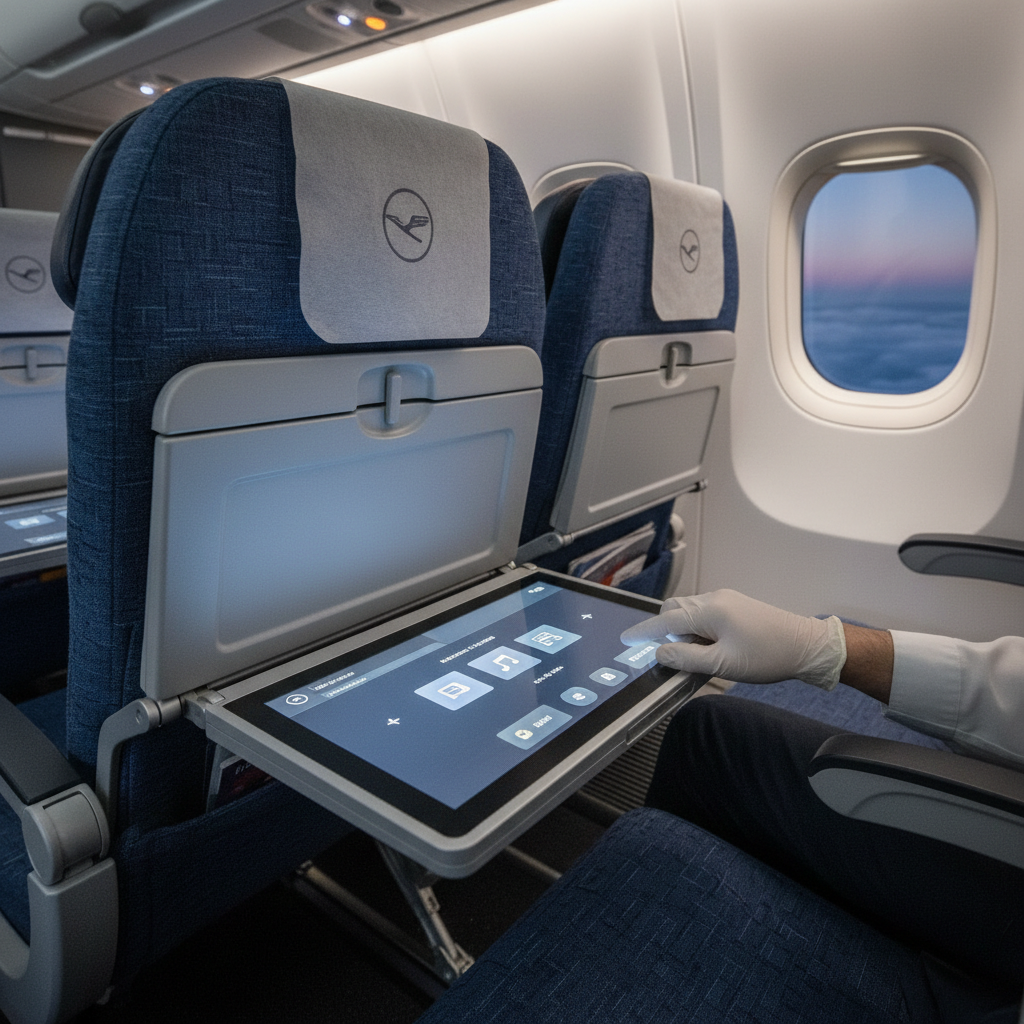
Lufthansa touchscreen tray table turns the classic fold-up tray into an interactive in-seat interface.
On November 15, 2025, Lufthansa (IATA: LH, ICAO: DLH) announced a prototype “smart” tray table developed with Diehl Aviation that hides a touchscreen beneath the surface. The concept aims to bring a more integrated digital cabin experience for passengers, combining entertainment, ordering and connectivity without adding visible hardware to the seatback.
The hidden screen can serve as an extension of the aircraft’s IFEC (In-Flight Entertainment and Connectivity) system — think movies, maps, messaging and pay-per-item ordering delivered directly from the tray surface. By keeping the touchscreen concealed when not in use, the design preserves cabin aesthetics and could simplify retrofits on existing fleets without removing current seatbacks.
Lufthansa’s announcement was intentionally high level: the carrier and Diehl Aviation have not published fixed specifications such as screen size, resolution, or power and connectivity architecture. That means airlines and regulators will watch how the system integrates with certification standards for in-seat electronics and EMI (electromagnetic interference) safeguards.
Trials planned for 2026 will be key to whether the tray-table touchscreen moves from concept to cabin fit. Lufthansa positions the project as part of broader cabin digitalisation efforts, targeting smoother passenger journeys and new ancillary revenue via onboard sales. If successful, the solution could influence digital cabin strategies across European carriers and offer a middle path between seatback screens and passenger-owned devices.
For passengers, the promise is subtle: more capability without more clutter. For airlines, it’s a modular upgrade path that may be easier and cheaper than wholesale seat replacements. Watch for trial dates and technical briefings in 2026 to see how the prototype performs under real-world flight conditions.