Physical Address
304 North Cardinal St.
Dorchester Center, MA 02124
Physical Address
304 North Cardinal St.
Dorchester Center, MA 02124
Global aviation news tracker
Global aviation news tracker
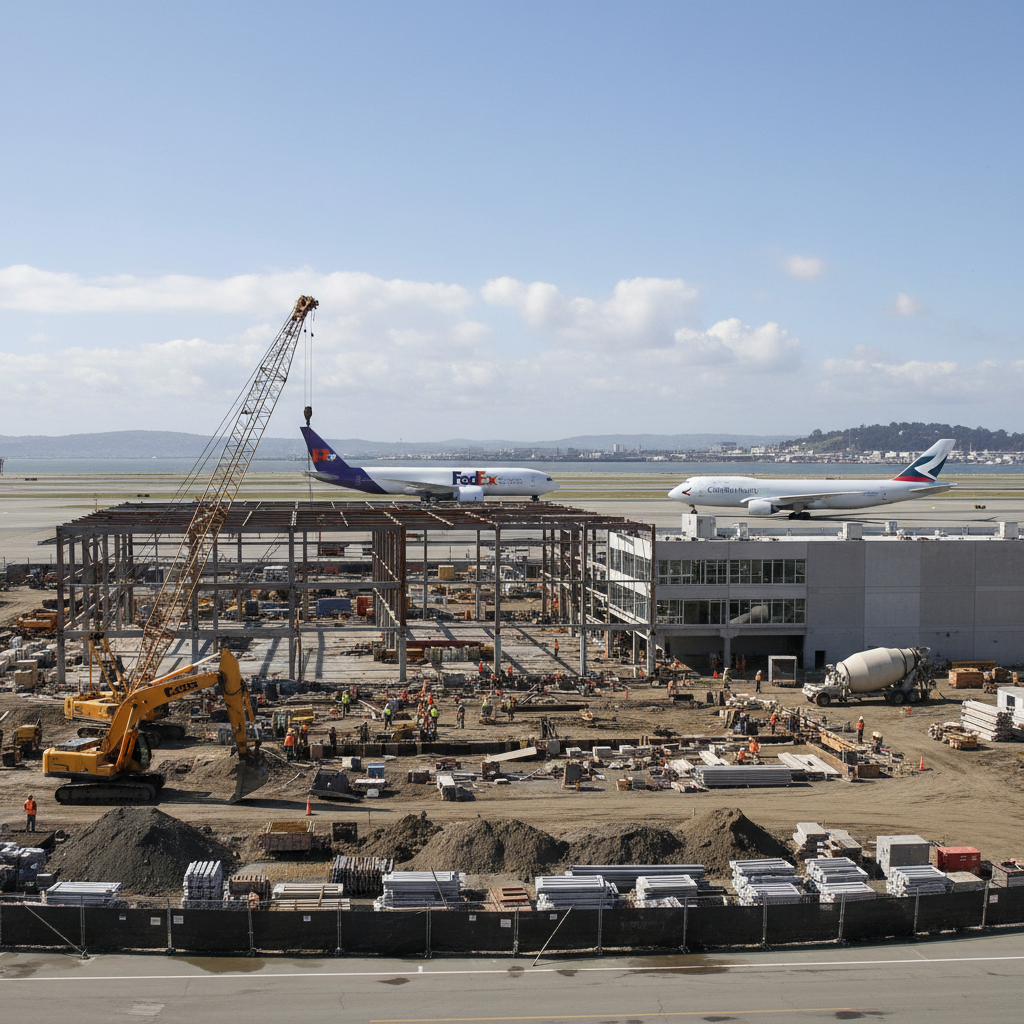
San Francisco International Airport (SFO) has started building a major new cargo facility to boost air freight capacity.
The SFO cargo facility will include a 95,000 sq. ft. dedicated cargo floor and 25,000 sq. ft. of office space, designed to support up to 30 trucks simultaneously for sorting and transfer operations.
Stockholm-based contractor Skanska is leading construction on the site and will also deliver a 17,000 sq. ft. ground services equipment (GSE) maintenance facility. The project was announced with a completion target of 2028, and is part of SFO’s longer-term strategy to modernize air cargo handling.
Because the site sits close to active runways at San Francisco International Airport, engineers are using specialized construction techniques to meet strict runway height restrictions while maximizing functional space. Planners say the design balances operational needs with FAA (Federal Aviation Administration) safety and airfield clearance rules.
Operationally, the addition should ease bottlenecks for airlines and freight forwarders operating through SFO, a key West Coast gateway. Although exact tenant airlines or cargo operators haven’t been named publicly, the facility is expected to serve a mix of integrators, carriers and ground handlers once it opens.
Project leaders have emphasized timeline discipline: work has already started and the team is targeting 2028 for substantial completion. Tight airfield constraints will likely make construction phases more complex than a standard warehouse build, so stakeholders are planning phased access and coordination with airport operations.
The development reflects growing demand for air cargo infrastructure at U.S. gateway airports. For passengers and local communities, the build aims to separate freight flows from passenger terminals while adding maintenance capacity for ground equipment.