Physical Address
304 North Cardinal St.
Dorchester Center, MA 02124
Physical Address
304 North Cardinal St.
Dorchester Center, MA 02124
Global aviation news tracker
Global aviation news tracker
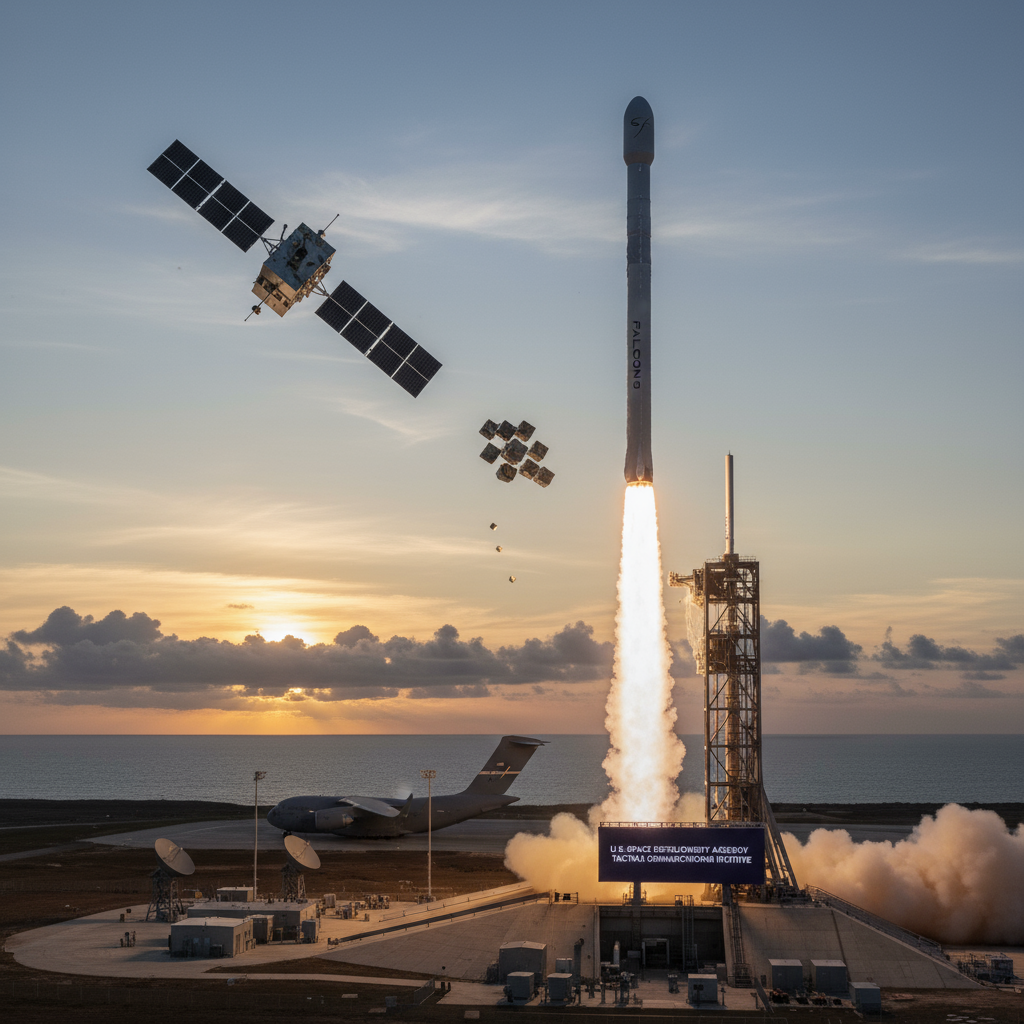
SpaceX’s September 10, 2025 Falcon 9 lifted 21 SDA satellites into orbit to strengthen U.S. tactical communications in the Indo‑Pacific.
Launching from the Western Range on September 10, 2025, SpaceX sent a Falcon 9 rocket into orbit carrying 21 data transport satellites for the U.S. Space Development Agency (SDA). The batch is designed to improve secure, resilient connectivity for U.S. military operations and allied coordination across the Indo‑Pacific region.
The mission underscores how commercial launch providers and defense space programs are increasingly integrated. SpaceX served as the launch operator, while the SDA provided the payloads — smallsat nodes intended to move data quickly between forces, sensors, and partners.
These SDA satellites are part of a broader push toward mesh-like space constellations that emphasize low-latency routing and survivable communications. For tactical users, that means more routing options if ground or traditional satellite links are degraded, and better coordination between U.S. forces and allied units.
Technically, data-transport satellites focus on relaying information rather than providing direct consumer services. That distinction matters: design priorities skew toward encryption, anti-jam capabilities, and interoperability with military networks rather than passenger broadband speeds.
Strategically, the launch signals continued U.S. investment in space-layered defense architectures and the growing role of commercial firms in delivering critical national-security services. As more launches place tactical nodes on orbit, commanders gain more options to route command-and-control traffic during crises.