Physical Address
304 North Cardinal St.
Dorchester Center, MA 02124
Physical Address
304 North Cardinal St.
Dorchester Center, MA 02124
Global aviation news tracker
Global aviation news tracker
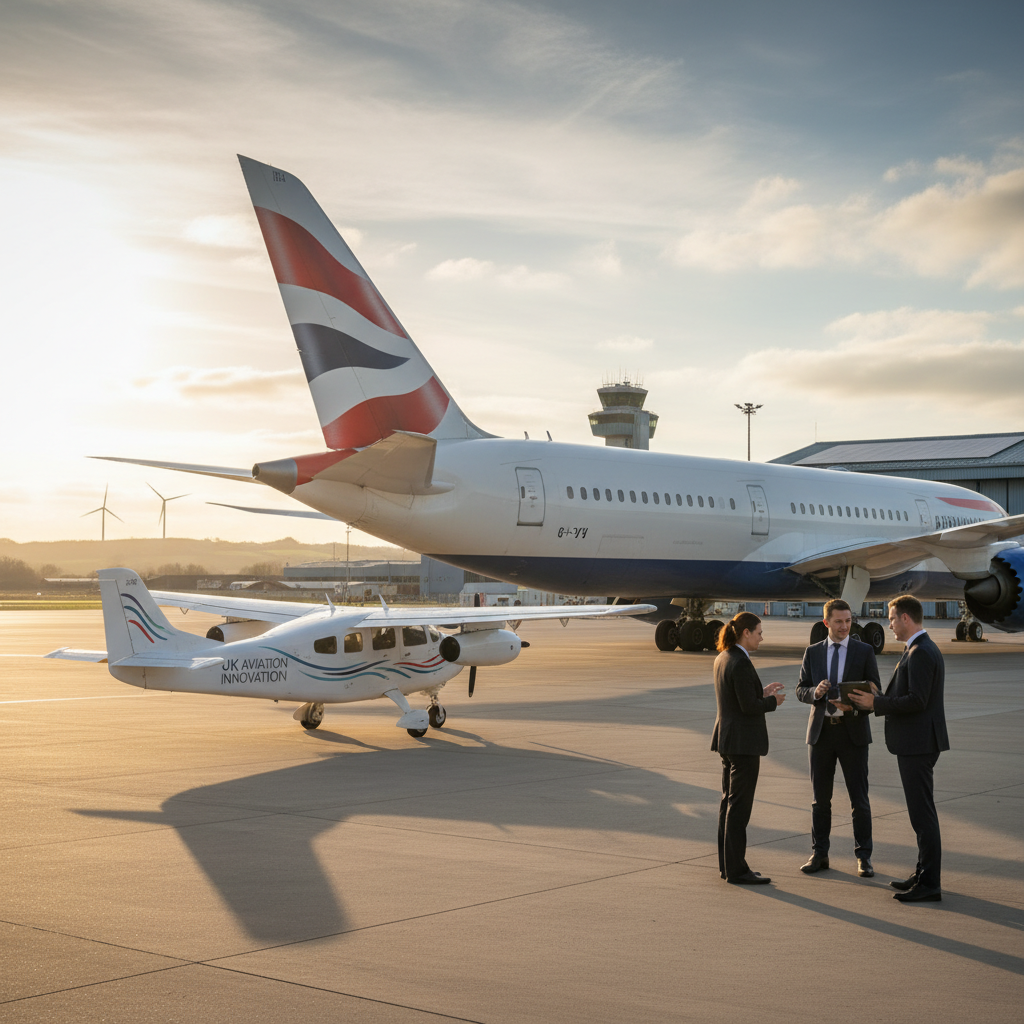
UK funding targets the climate impact of aviation beyond CO2, with three domestic projects focused on contrails and other non-CO2 effects.
The UK government has announced new support for three domestic initiatives aimed at reducing non-CO2 aircraft emissions — a shorthand for climate-relevant effects from aviation that aren’t carbon dioxide, such as contrails and some short-lived greenhouse gases. The package backs research teams and industry partners working to cut the sector’s broader warming footprint while keeping commercial operations viable.
These projects are led by UK-based research groups in collaboration with aviation industry partners, targeting practical interventions that could be scaled across airlines and airspace. Rather than focusing on fuel or long-term propulsion shifts, the work emphasises operational, atmospheric and modelling solutions to reduce the climate forcing of contrails and other non-CO2 effects.
The initiatives include improved predictive models for contrail formation, flight-route optimisation to avoid contrail-prone conditions, and measurement campaigns to better quantify non-CO2 warming. The research will test how small operational changes — for example, modest altitude adjustments or revised climb and cruise profiles — can lower the chance of persistent contrails that trap heat.
Industry partners will be able to run trial flights and feed real-world data into the models. That loop — measurement, modelling, operational testing — is designed to produce guidance that regulators, air-navigation service providers and airlines can adopt without extensive retrofitting of fleets.
The announcements underline the UK’s push to lead on aviation sustainability research, expanding the conversation beyond sustainable aviation fuel (SAF) and CO2 targets to include the immediate climate impacts of contrails and related emissions. Success would mean options for airlines to reduce warming now, while longer-term technology shifts continue.
Expect updates as the projects move from modelling to field trials and published results. If the trials show measurable reductions, the findings could influence best practices for flight operations worldwide.