Physical Address
304 North Cardinal St.
Dorchester Center, MA 02124
Physical Address
304 North Cardinal St.
Dorchester Center, MA 02124
Global aviation news tracker
Global aviation news tracker
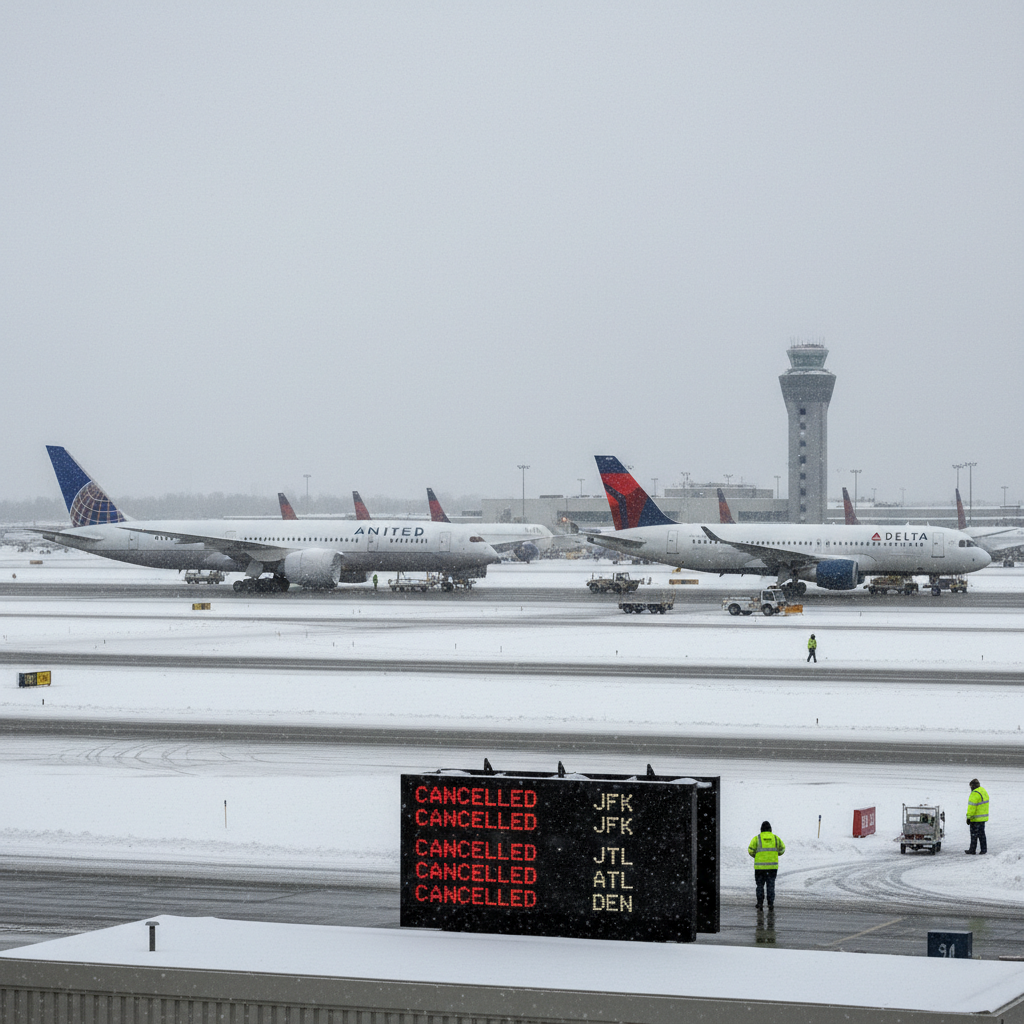
Over 2,000 flights were canceled and more than 6,400 delayed across the US on Monday, November 10, as FAA capacity limits and winter weather hit major hubs.
The Federal Aviation Administration (FAA) set temporary capacity limits at 40 major airports, contributing to a wave of operational disruption on Monday, November 10. Airlines nationwide reported more than 2,000 cancellations and in excess of 6,400 delays as severe winter weather moved through key hubs.
Chicago O’Hare (ORD) recorded the largest hit with 454 cancellations, Atlanta Hartsfield‑Jackson (ATL) logged 227, and New York LaGuardia (LGA) had 144 canceled flights. The disruptions followed a weekend that saw over 4,500 cancellations and roughly 17,000 delays nationwide, raising concerns that shortages in air traffic control staffing could extend the impact.
Officials pointed to a mix of factors: FAA staffing limits at busy airports, crews held up by weather, and the knock‑on effects of earlier cancellations. The FAA — which manages the national airspace — said capacity measures were meant to preserve safety and reduce gridlock, but airlines said the caps forced them to cancel more flights than planned.
In a public response, President Trump urged air traffic controllers to return to work and proposed a $10,000 bonus for those who did not take leave during the staffing shortfall, though specifics of any incentive plan were not provided. Industry analysts warned that if controller staffing and severe weather persist, passengers should expect continued disruption into the coming days.
Travelers should check airline notifications, rebook proactively, and factor extra time for connections. Airlines and the FAA will likely coordinate revised schedules as weather clears and staffing stabilizes; however, the backlog from a multi‑day disruption means some delays and cancellations could linger.