Physical Address
304 North Cardinal St.
Dorchester Center, MA 02124
Physical Address
304 North Cardinal St.
Dorchester Center, MA 02124
Global aviation news tracker
Global aviation news tracker
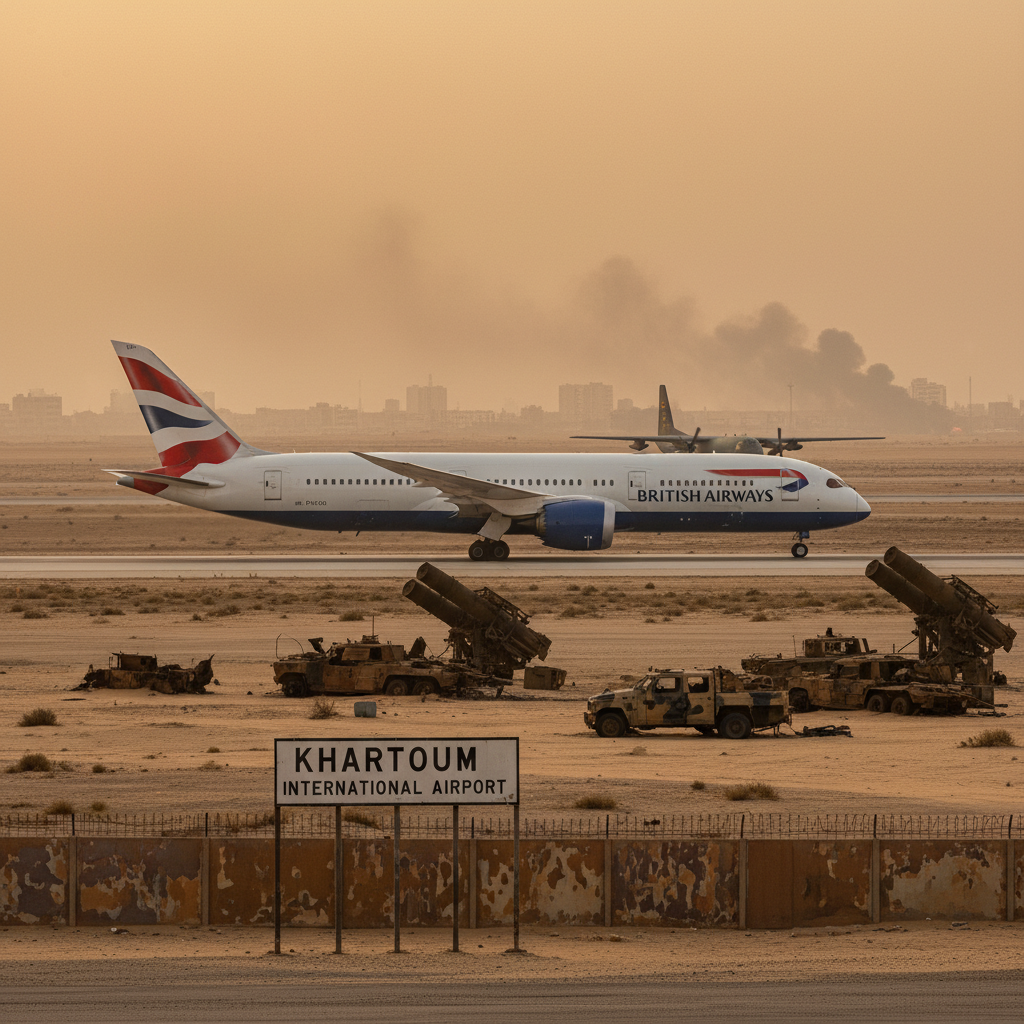
US and UK warnings urge airlines to steer clear of Sudanese skies amid active fighting.
On November 22, 2025 several Western governments, including the United States and the United Kingdom, issued or reaffirmed Sudan airspace warnings advising operators to avoid Sudanese airspace entirely. Authorities cited ongoing military clashes and the heightened risk that anti-aircraft weaponry or ground fire could endanger civil aircraft.
Beyond the danger in flight, guidance now highlights a growing concern about ground security for any unplanned diversions to airports inside Sudan. Crews and passengers can face significant risks if a diverted aircraft lands where local security conditions are unstable, and airlines are being urged to plan routes with secure diversion options in neighboring countries.
These advisories directly affect international flight planning across trans‑African and Middle Eastern routes. Airlines typically reroute to avoid overflying conflict zones, which can add time, fuel burn and operational complexity. Insurers, slot coordinators and ground handlers also factor in the warnings when updating risk assessments and contingency plans.
For operators, the guidance is straightforward: do not use Sudanese flight levels or routes until official notices are rescinded and local security improves. Because flight crews cannot control ground conditions at a diversion field, operational control centres are prioritising routes that keep aircraft within reach of robust, secure diversion options.
The situation remains fluid. Airlines, air traffic service providers and international partners will monitor updates closely, and any easing of warnings will depend on demonstrable stabilization on the ground. Until then, Sudan airspace warnings will continue to shape routeing choices for carriers connecting Africa and the Middle East.